
Food safety culture simply explained
What is food safety culture? Definition, legal requirements and why behavior is critical to food safety.

What is food safety culture?
Food safety culture describes the shared values, beliefs and behaviours within a company that influence how food safety is handled.
With Regulation (EU) 2021/382, it has become a clear requirement.
Why culture is crucial
Systems define processes.
Culture determines behavior.
A company can have perfect processes — if they are not implemented, risks arise.
Food safety culture ensures that:
- Rules are understood
- Assume responsibility for employees
- Decisions are made securely
The 5 dimensions of food safety culture
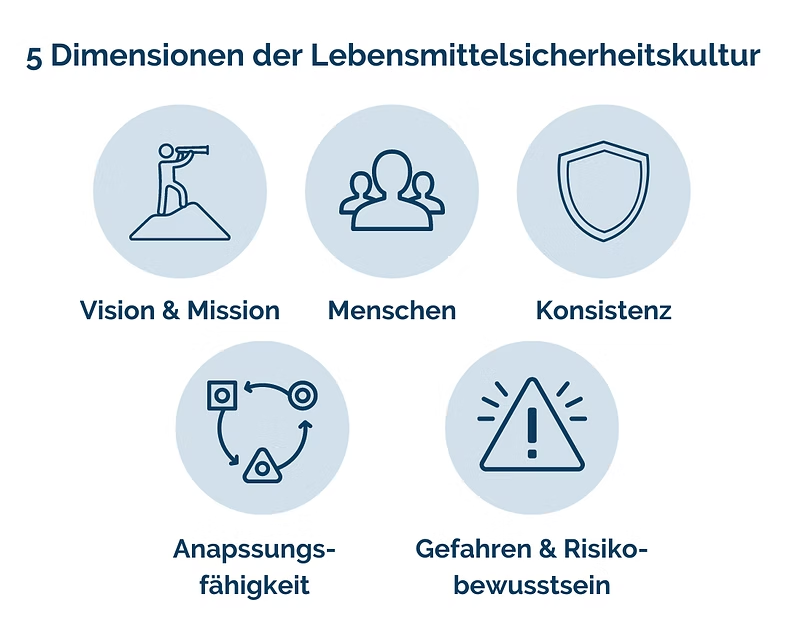
1st vision
Food safety is part of the company's values.
2. People
The behavior of employees determines implementation.
3. Consistency
Processes are lived stably and reliably.
4. Adaptability
Companies are responding to new risks and requirements.
5. Risk awareness
Risks are identified early on and correctly assessed.
What happens without culture
Without lived culture, typical problems arise:
- Rules are circumvented
- Errors are not addressed
- Risks are underestimated
The system remains theoretical — but not effective.
Benefits of a strong food safety culture
- fewer errors and complaints
- more stable processes
- better communication within the team
- higher motivation
- sustainable auditability
conclusion
Food safety is not achieved through documents, but through behavior.
Only when systems and culture work together does real stability arise.
Publications & Technical Papers
Practical experience — passed on in specialist literature, training courses and contributions on food safety.

Director Food Safety Senior Experts, Microbiologist & Food Safety Expert
With decades of experience in audits, quality management and crisis situations, she combines scientific principles with operational practice. Her publications make complex topics such as HACCP, food safety culture and risk analysis understandable and directly applicable. For companies that not only pass certifications, but also want to sustainably improve their systems.
.jpg)