
Food safety expertise
.png)
What food safety really requires: common myths in HACCP, microbiology, and hygiene, professionally assessed and separated from actual obligations.

Trading food doesn't automatically mean you need your own production facility, but you do need a robust system for managing suppliers, specifications, traceability, and crisis situations. IFS Broker, BRCGS Agents & Brokers, or FSSC 22000? We’ll give you a quick overview of which standard is right for whom, who requires them, and what really matters when making your choice.
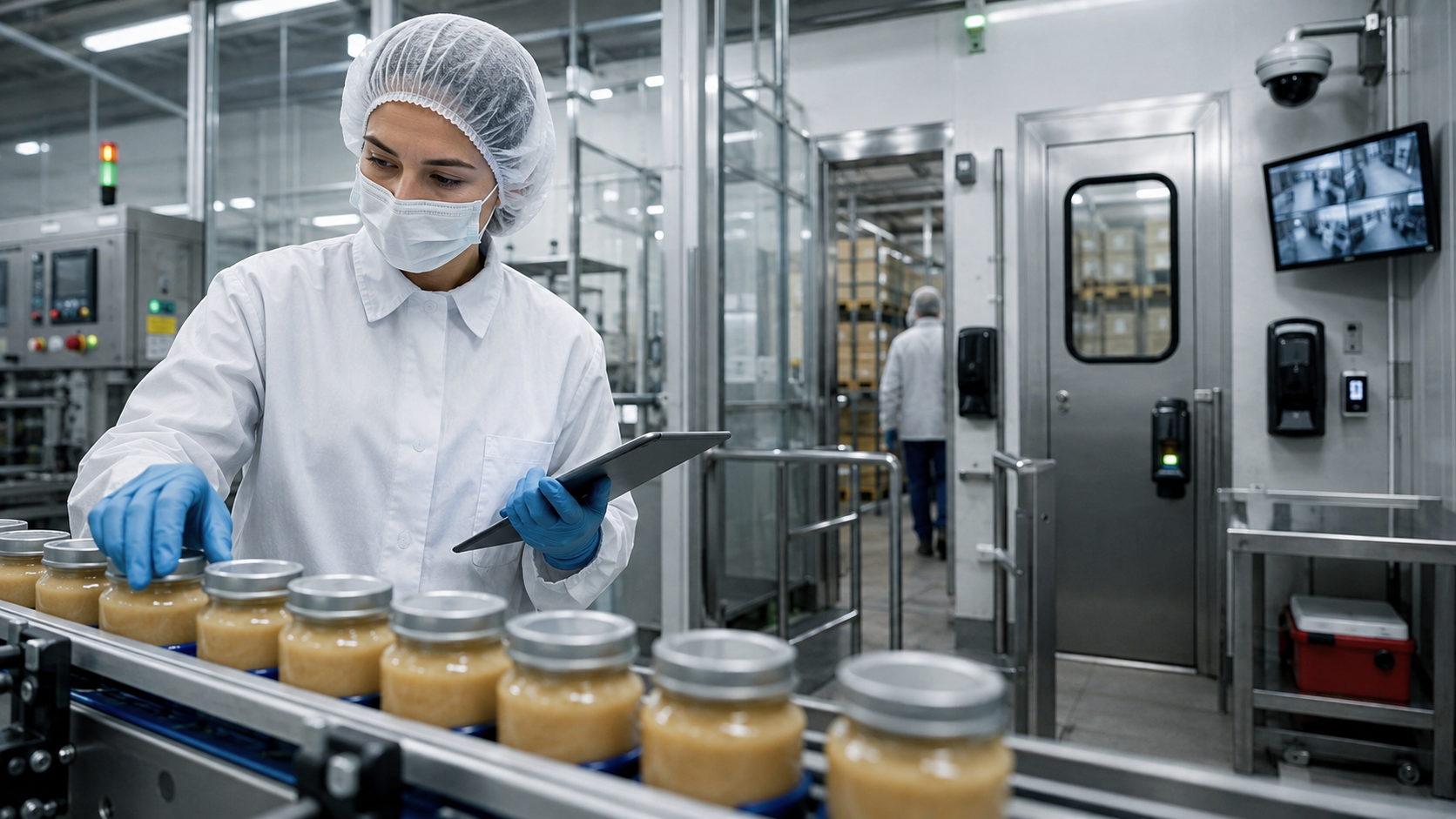
In 2026, food defense is about more than just fences, access control, and visitor logs. Recent tampering cases, the new PAS 96:2026, and the German KRITIS Umbrella Act highlight how much the threat landscape has shifted. It is time for a critical look at your own threat analysis: where is your facility truly vulnerable today?
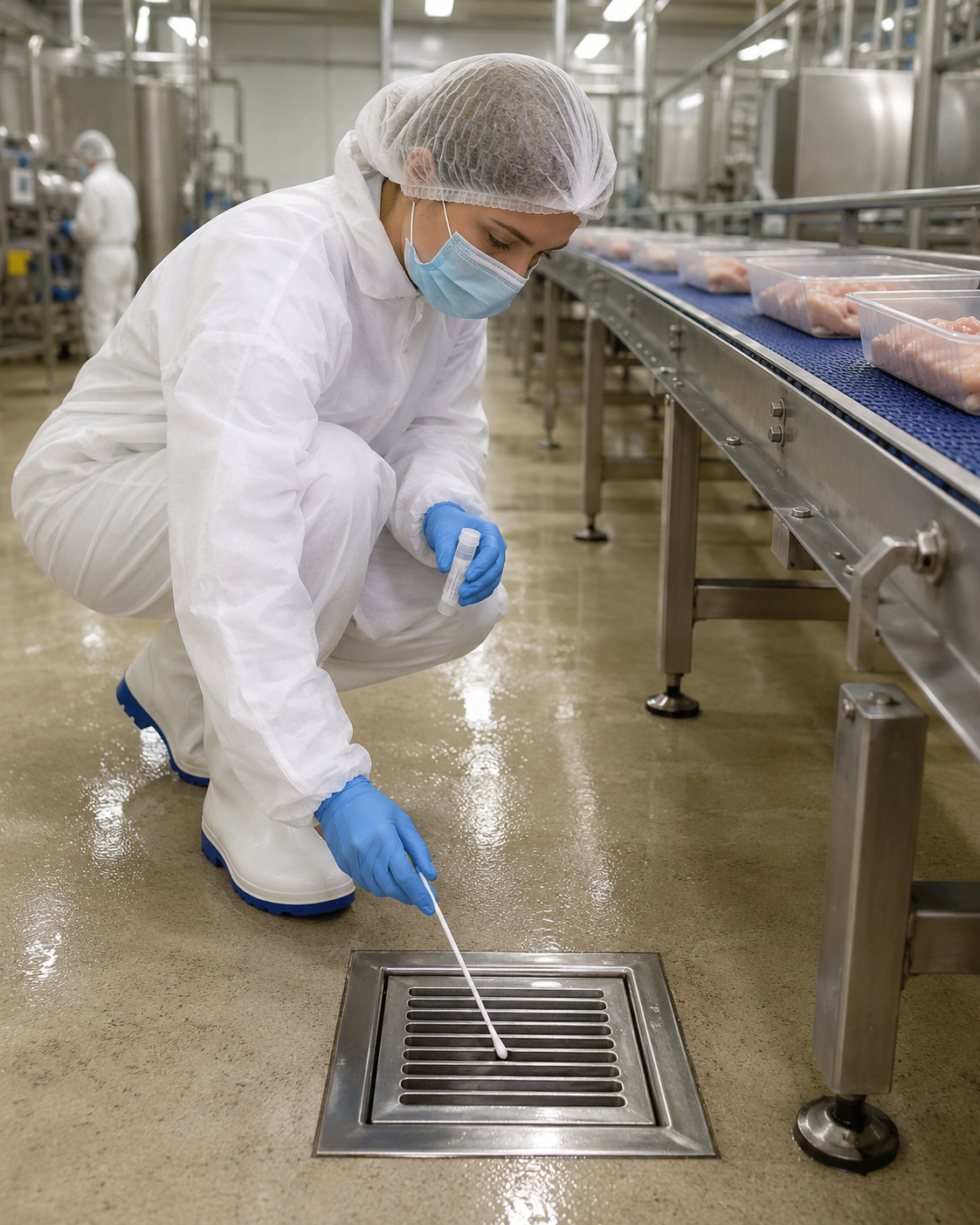
A positive environmental Listeria result is a serious warning sign. However, it does not automatically prove that the product is also contaminated, and therefore it does not always trigger an immediate recall. Key factors include the specific pathogen detected, the hygiene zone, proximity to the product, the type of food, shelf life, and any relevant product test results.

When is a food product actually no longer shelf-stable? When pathogens are detectable? When the total bacterial count exceeds a certain value? Or when consumers no longer accept the product? A recent study on fresh chicken breast shows how varied these answers can be. A reliable determination of shelf life must not only consider pathogens and general bacterial count thresholds. It must also take into account which spoilage organisms are actually growing, what metabolic products they produce, and when a product is no longer sensorially acceptable.
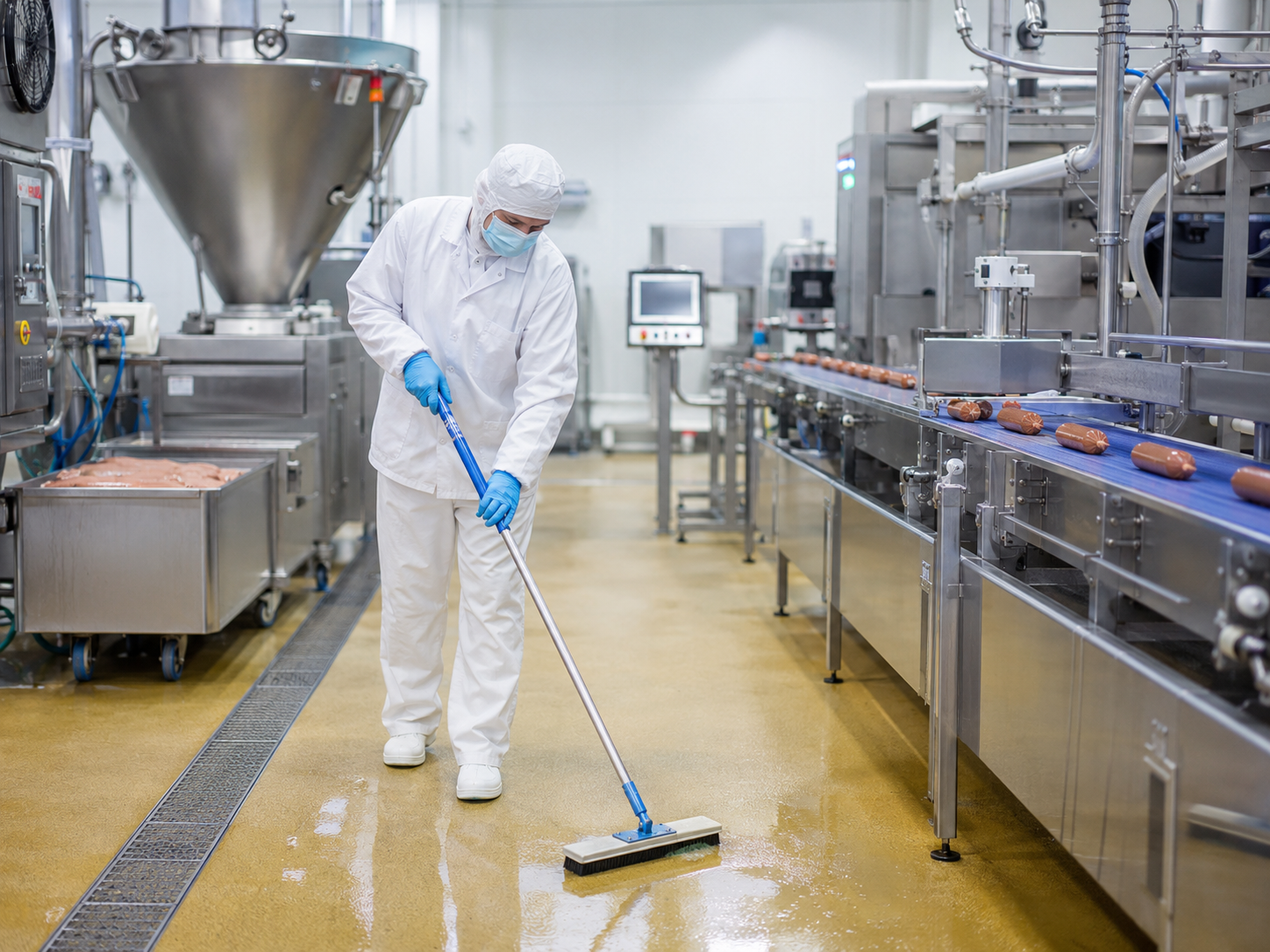
Cleaning and disinfection are often viewed as routine. They are anything but. They are a process that must be scientifically grounded, validated, and continuously monitored, as they determine the microbiological safety of an entire operation. In industrial production, this process is frequently outsourced to specialized cleaning service providers. While this makes sense, it does not absolve the company of its responsibility.
Publications & Technical Papers
Practical experience — passed on in specialist literature, training courses and contributions on food safety.

Director Food Safety Senior Experts, Microbiologist & Food Safety Expert
With decades of experience in audits, quality management and crisis situations, she combines scientific principles with operational practice. Her publications make complex topics such as HACCP, food safety culture and risk analysis understandable and directly applicable. For companies that not only pass certifications, but also want to sustainably improve their systems.
.jpg)


