
"Plant-based" is now defined: What ISO 8700:2025 means for labeling, quality management, and product release
"Plant-based" is internationally defined for the first time by ISO 8700:2025. This clarifies what companies must consider in the future when labeling and promoting plant-based foods.
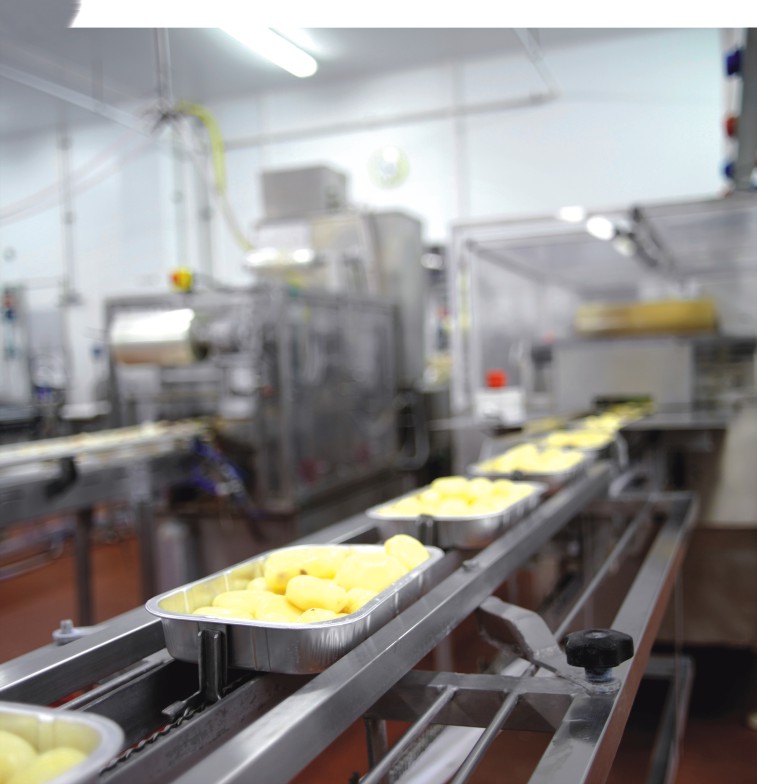
The term "plant-based" has long been used very inconsistently: sometimes as a synonym for vegan, sometimes as an indication of predominantly plant-based recipes, sometimes as an advertising message for sustainability. This is precisely where ISO 8700:2025 comes in. For the first time, the standard internationally defines the technical criteria applicable to the labeling and promotion of plant-based foods and ingredients. It is voluntary, but practically relevant for quality management, product development, specifications, and marketing: It creates a common language and reduces the risk of misleading claims.
What the Standard Regulates
ISO 8700:2025 is not a nutritional, sustainability, or safety standard. It is a definition and labeling standard. It describes when processed foods and ingredients can be presented as plant-based. It applies to business-to-business communication, consumer communication, authorities, trade, and labeling. It does not cover, among other things, unprocessed edible plant parts such as fruits, vegetables, legumes, and grains, animal feed, pet food, packaging materials, or questions regarding cultivation, environment, food safety, personal safety, animal welfare, or animal testing.
Important for practical application: In the context of the standard, "plant-based" primarily refers to the origin of ingredients. It is not an automatic promise of health, low processing, or sustainability.
The Core: Two Product Groups
The standard essentially distinguishes between two groups.
Group 1: Plant-based foods without animal ingredients The characterizing ingredients are plant-based or of plant origin. Animal or animal-derived ingredients are not included. These products can be claimed as "plant-based".
Group 2: Foods with limited and conditional use of animal ingredients Here too, the characterizing ingredients are plant-based or of plant origin. However, certain animal ingredients may be permissible under strict conditions. Such products may not simply be labeled as "plant-based". A qualifying or deviating designation is required, and the animal ingredient must be clearly and transparently indicated.
For quality management, this distinction is the crucial step: Each product requires a clear classification before release.
What's Now Required for Product Release
For companies, this results in a very specific need for review:
First: Review the formulation. All ingredients, additives, carriers, processing aids, and fortified micronutrients must be checked for plant or animal origin. A second look is particularly worthwhile for vitamin D3, flavorings, enzymes, carriers, or compound ingredients.
Second: Define product group. The product should be documented as belonging to one of the two groups. This classification must be included in the specification, release documents, and labeling review.
Third: Review claims. "Plant-based" or "100% plant-based" should only be used if the recipe and supporting evidence align. For a limited animal content, a green overall appearance on the packaging is not sufficient. The animal content must be clearly identifiable for consumers.
Fourth: Align marketing and quality management. The most appealing claim is of little use if it is not supported by the recipe, supplier documentation, and manufacturing process. Conversely, a clear technical classification can become a deception risk again due to vague advertising.
Manufacturing: Cross-contact remains a verification topic
The standard also considers manufacturing. Those who produce plant-based products on equipment that also processes animal products must control unintended inclusions. This does not automatically mean that every shared line is excluded. The key is whether appropriate precautions are taken, cleaning and changeover processes are controlled, and the measures are documented.
In practice, this means:
- Consider the risk of "animal inclusion" in the hazard and claims assessment .
- Clearly describe cleaning and changeover when switching from animal-based to plant-based products.
- Require supplier documentation for critical ingredients.
- Check whether existing Allergen Management is sufficient, or if there is an additional labeling and consumer expectation risk.
- Document why the chosen claim is technically justifiable.
The burden of proof effectively lies with the company. Anyone making a "plant-based" claim should be able to demonstrate why that statement is true.
Research: The term doesn't tell the whole story
Recent studies confirm that terms on packaging are not neutral. Research shows that "plant-based" is perceived differently by many consumers than "vegan" or "vegetarian." In several studies, "plant-based" tended to be more widely accepted. This is interesting for marketing, but also for quality management. The more a term influences purchasing decisions, the more thoroughly it must be substantiated.
At the same time, nutritional science studies show: "Plant-based" is not automatically "healthy." Many industrially produced plant-based substitute products are highly processed. Depending on the product group, salt content, protein quality, fortification, and nutritional profile can vary greatly.
It follows that an ISO 8700-compliant claim is not a nutritional promise. Health and nutrition claims must continue to be checked separately according to applicable legal requirements.
Regulatory Environment: Developments in Europe
In parallel with ISO 8700, the European discussion on designations for plant-based substitute products is also evolving. In March 2026, the Council and the European Parliament reached a provisional agreement on the protection of certain meat designations. Terms such as "meat" and specific designations like "steak" or "bacon" are to be reserved for meat products in the future. The formal adoption and entry into force must be examined separately.
For companies, this means: ISO 8700 does not resolve all designation issues. However, it helps to establish a clear origin and claim logic within one's own system.
Conclusion
ISO 8700:2025 is a reference point. It brings order to a market where terms have often been used inconsistently. For quality managers, the benefits are very concrete: clearly classify products, fully verify ingredient origin, reconcile claims with recipes and evidence, control cross-contamination, and professionally approve marketing statements before publication.
Those who establish clear regulations early on not only reduce legal and audit-related risks but also build trust with retailers, authorities, and consumers.
Publications & Technical Papers
Practical experience — passed on in specialist literature, training courses and contributions on food safety.

Director Food Safety Senior Experts, Microbiologist & Food Safety Expert
With decades of experience in audits, quality management and crisis situations, she combines scientific principles with operational practice. Her publications make complex topics such as HACCP, food safety culture and risk analysis understandable and directly applicable. For companies that not only pass certifications, but also want to sustainably improve their systems.
.jpg)