
Review of the 11th KALS 2026: The key takeaways from two days of food safety
KALS 2026: New Listeria criteria, B. cereus, EmpCo, PPWR, EUDR, and emerging risks. Bottom line: Changes are a trigger, and testing plans must become smarter.
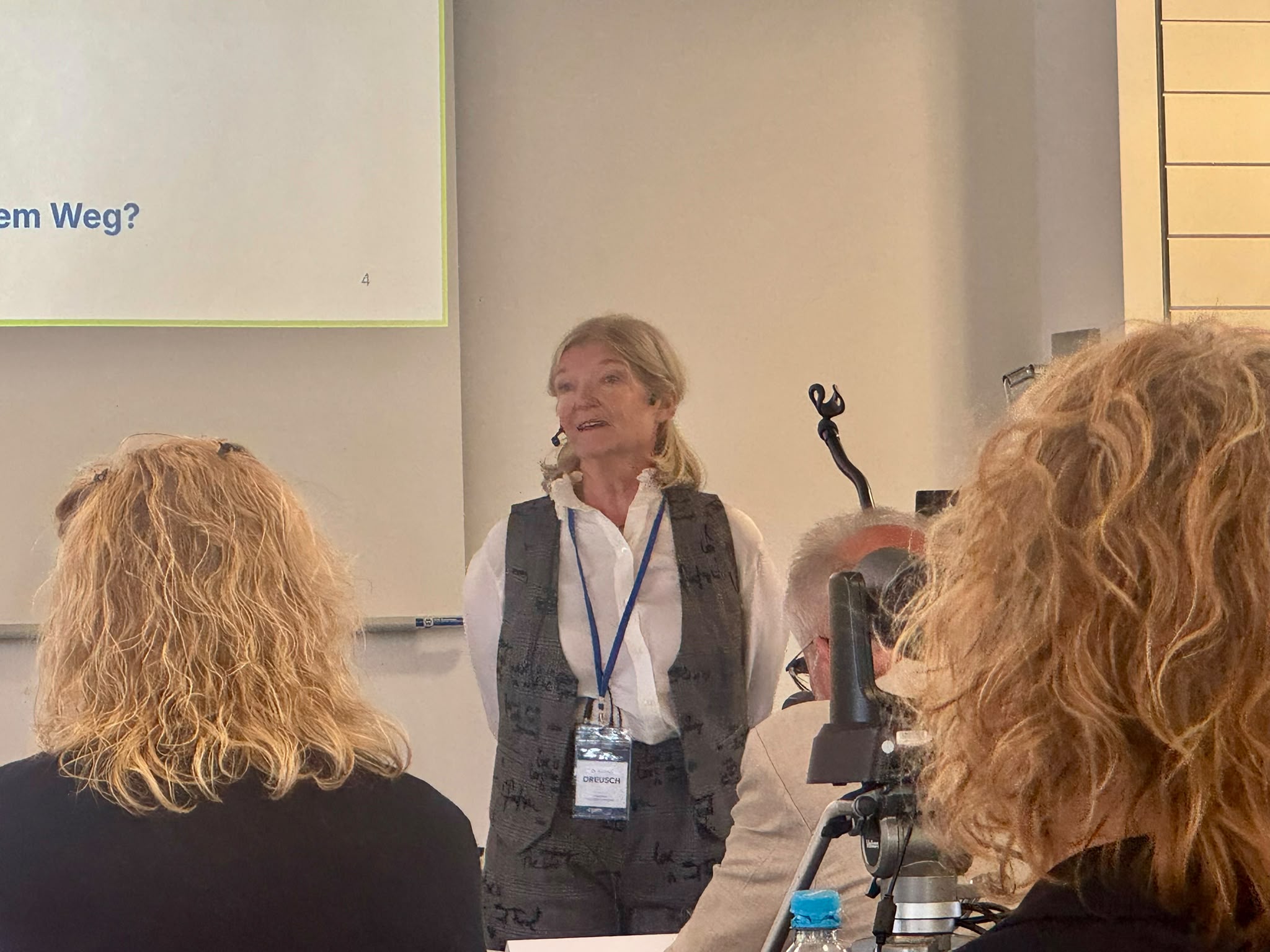
On September 30 and October 1, 2026, quality professionals gathered for the 11th Karlsruhe Food Symposium at the GenoHotel Karlsruhe. Thirteen presentations over two days, moderated by chairman Dr. Gerd Fricke. The common thread: The risk landscape is moving faster than our testing plans. This article summarizes the key takeaways for your operations from each presentation.
Microbiology: Bacillus cereus is back on the agenda, and Listeria criteria are getting stricter.
Paul Andrei from the BAV Institute opened with the 2025 figures: 43 notifications for Listeria monocytogenes and 27 for Salmonella were published on lebensmittelwarnung.de. In addition, there were cereulide cases in infant formula leading to recalls in several countries, and an EHEC outbreak of the rare serotype O45:H2 with 199 confirmed cases, 53 of which were HUS cases, and three deaths. The cause of the EHEC outbreak remains unknown.
Regarding the top topic, Bacillus cereus it is essential to distinguish between the findings. The colony count of presumptive B. cereus says nothing about its toxin-producing potential. The emetic toxin cereulide is heat-stable and acid-resistant; it is produced within the food and can be detectable even when no living B. cereus are present anymore. Illnesses from cereulide producers are reported starting at approximately 10³ to 10⁴ CFU/g, and from diarrhea-causing toxin producers starting at 10⁴ to 10⁶ CFU/g. The most important causes remain contaminated raw materials and improper temperature control. The most important measures: raw material quality, cooling to below 10 °C in less than three hours, and keeping warm at a minimum of 60 °C for no more than three hours.
Regulation (EU) 2024/2895 has been in effect since July 1, 2026, and tightens the criteria for ready-to-eat foods in category 1.2, i.e., products that support the growth of Listeria monocytogenes. Anyone unable to prove that levels of 100 CFU/g are maintained until the end of shelf life must now ensure "not detectable in 25 g" throughout the entire shelf life. This applies equally to both retail and manufacturing levels. Proper categorization thus becomes a central task: chemical-physical product properties, literature, storage trials, challenge tests, and predictive models provide the necessary evidence.
Third block: Drinking water. The testing obligations of the Drinking Water Ordinance apply only to water suppliers. Food businesses without their own water supply system conduct internal checks as part of their quality assurance, without accredited samplers and without the scope of testing required by the ordinance. Nevertheless, the water must still meet drinking water quality standards. After the safety device, water is no longer considered drinking water. Ice cubes, flake ice, and crushed ice are food products, as confirmed by the ALTS resolution from June 2025.
Avoiding crises before they arise
Claus-Michael Brieber focused on a simple question: Does exceeding a legal limit make the goods unsafe or merely non-marketable? Maximum levels for residues and contaminants are legal limits. They are rarely based on toxicological grounds. A public recall or a silent withdrawal requires unsafe food according to Article 14 of Regulation (EC) No. 178/2002. This requires a sound risk analysis, as confirmed by the Higher Administrative Court of Schleswig (Case No. 3 MB 8/24).
His calculation method for the crisis team: consumption amount multiplied by the analytical value, compared with the ADI, ARfD, or TDI multiplied by body weight. This includes questions regarding the representativeness of the sample, counter-samples, process factors, and expanded measurement uncertainty. The terms complaint, withdrawal, and recall must be clearly distinguished.
For early detection, Brieber recommends regular screening of RASFF, lebensmittelwarnung.de, BfR, EFSA, ALS, and ALTS, as well as cross-referencing internal findings databases with upcoming changes to limit values. External laboratories can handle this cross-referencing. When dealing with authorities, the rule is: seek dialogue during quiet times, stay calm in the event of a complaint, wait for your own results, and only then communicate. "Without undue delay" means without culpable hesitation after sufficient clarification of the facts, not "immediately." If an authority demands a recall, it should be ordered in writing.
His firsthand practical tip: either analyze batches and wait for the result, or do not analyze and release them. Never release before the result is available.
Emerging Risks and HACCP: A new risk does not require a new hazard
The risks of tomorrow often arise from the solutions of today. Dr. Andrea Dreusch opened her presentation with this statement, supporting it with data from the 2024 EFSA/ECDC zoonosis report: 6,558 outbreaks (up 14.5 percent), 62,481 cases of illness (up 19.7 percent), and 3,041 invasive listeriosis cases with the highest mortality rate. Listeriosis, salmonella in eggs, STEC, and campylobacter are showing upward trends.
According to the EFSA definition, an emerging risk enters through one of three doors: a new hazard (e.g., 6PPD-quinone from tire wear), a known hazard with new exposure (bongkrekic acid, arsenic in rice drinks, chloropicrin), or a known hazard with new susceptibility (listeriosis in an aging society). Two out of three doors do not require a new hazard. Six drivers shift exposure: climate and water, regulation, formulation and trends, sustainability, technology and IT, and demographics and geopolitics.
From the 2025 EFSA list, she highlighted bongkrekic acid from faulty fermentation, bio-based contact materials with unclear characterization, illegal cafodos treatment of fish, and antiparasitic resistance in livestock. For HACCP teams, she listed six points: substitution ("BPA-free" is not proof of safety on its own), demographics (by 2035, 25 percent of the population will be at least 67 years old), reformulation (less salt changes hurdles), geopolitics and cost pressure (a change of supplier is a trigger), cyberattacks as a food safety event, and foreseeable misuse by consumers.
Four tools for next week: triggers instead of calendars (each trigger gets an additional question, a sample, and an end date), a short check with seven questions before every change, a four-stage triage of new risk signals, and a regulatory calendar in the standard operating procedures. The goal is not a larger testing plan, but a smarter one. Or, in one sentence: structured skepticism toward changes until data shows stability.
Legal Update: NGT Regulation, EmpCo Directive, and the new PPWR FAQ
The traditional legal update by attorney Dr. Boris Riemer started with the listeria criterion and added the legal interpretation: the decisive factor is not just end-product testing, but a robust combination of product characterization, shelf-life and storage temperature assumptions, environmental monitoring, and documented justification of the shelf life.
The NGT Regulation (EU) 2026/1388 of June 17, 2026, generally applies from July 17, 2028. It creates two categories of plants derived from new genomic techniques. NGT-1 plants are treated as equivalent to conventional plants; food derived from them does not carry GMO labeling. The labeling requirement focuses on seeds. NGT-2 plants remain under the GMO regime. Both categories are excluded from organic production, but the accidental presence of NGT-1 does not automatically lead to a violation of the Organic Regulation. Open practical questions: supplier declarations, specifications, and "GMO-free" claims.
The EmpCo Directive (EU) 2024/825 has been applicable since September 27, 2026, without a transition period, even for existing products. General environmental claims such as "green" or "climate-friendly" are prohibited without proven, recognized, and excellent environmental performance. Advertising with "CO2-neutral" based on offsetting is prohibited. Sustainability labels must be based on a certification system or be state-defined. Brand and product names containing terms like "green" or "eco" are also covered. Riemer pointed to Article 3(3) of the FIC Regulation as a possible approach for existing stock and to the GS1 guide "Sustainable Product Claims" for assistance. The Green Claims Directive is still in the legislative process.
Regarding the PPWR, he presented the Commission's FAQ paper from August 3, 2026. Important clarifications: the producer is the party that determines the packaging characteristics, not necessarily the physical manufacturer. Existing stock does not need to be destroyed or relabeled by August 12, 2026. A declaration of conformity for the entire packaging unit is sufficient. Technical documentation must be available at the responsible company for five years (single-use) or ten years (reusable). The Commission has announced "soft" enforcement, but no grace period.
From case law: The Federal Administrative Court (judgment of July 23, 2026, 10 C 6.25) assigns permanent carrier bags to the dual system. The Higher Administrative Court of Lower Saxony (June 25, 2026, 13 LC 175/24) requires a notice in the immediate vicinity of the name for spreadable raw sausage containing 3 percent sunflower oil. The ECJ (May 13, 2026, C-483/24) considers the cleaning obligation under Regulation (EC) No. 852/2004 not fulfilled if authorities detect traces of pests on food-contact fittings. The Federal Court of Justice has referred the question of repetitive nutritional information to the ECJ (decision of November 20, 2025, I ZR 2/25). Regarding Section 40(1a) of the LFGB, case law remains inconsistent, for example, regarding the addition of expected fines.
EUDR: Check the CN code first, then clarify the role
Prof. Dr. Clemens Comans provided structure for the Deforestation Regulation (EU) 2023/1115. It is to be applied from December 30, 2026, and for small and micro-enterprises from June 30, 2027. It covers soy, oil palm, cattle, coffee, cocoa, rubber, and wood, as well as the products listed in Annex I. Animal species other than cattle are currently not included.
His verification scheme: identify all purchased items, determine the associated CN codes, and cross-reference them with Annex I. The EUDR is only applicable if there is a match. The "ex" before a code means an excerpt: ex 0201 covers only meat of the genus Bos, not bison or buffalo.
The role determines the obligations. Operators place relevant products on the market for the first time and must fulfill the full due diligence obligation and submit a due diligence statement. Downstream operators and traders only need to collect the information according to Article 5(3) and keep it for five years. For meat processors, this usually means: the farmer is the operator, the slaughterhouse is the first downstream operator, and the processor collects information. If customers demand a due diligence statement for products outside the scope, this demand should be rejected and removed from contracts.
Packaging that supports, protects, or carries another product does not fall under the EUDR. An empty new wooden pallet does. Regulation (EU) 2025/2650 removed printed products from Annex I, so advertising flyers and printed labels are now excluded. A draft for a delegated act is intended to remove further products but, as of December 30, 2027, will include, among others, coffee extracts, frozen beef tongues, and certain palm oil derivatives. Entry into force is expected in December 2026. The EUDR information system has been available again since the end of June 2026, and Implementing Regulation (EU) 2026/1565 of July 14, 2026, regulates the technical framework.
Thermal preservation: It is not the CCP that is validated, but the process
Dr. Richard Röhlig clarified terminology: shelf-stable is not the same as sterile, and commercially sterile does not mean free of living microorganisms. It is not the temperature sensor that is validated, but the process that ensures a CCP functions as intended. Continuous recording of product temperature is not validation.
The 2026 case studies from lebensmittelwarnung.de revealed a clear pattern: Bacillus cereus in refrigerated high-protein pudding, spoiled rice cakes, and insufficiently heated game stock. Additionally, cereulide in baby food caused by contaminated arachidonic acid oil. The spores of B. cereus can withstand 100 °C for one to ten minutes, while the cereulide toxin survives 126 °C for 90 minutes. Heat-resistant molds such as Byssochlamys or Talaromyces produce ascospores that survive typical juice pasteurization processes.
Validation begins by defining the objective: which target organism, what kill rate, and on what basis? This is followed by a systematic examination of all influencing parameters under worst-case conditions: holding time, temperature distribution and cold spot, heat penetration into the product-packaging combination, and product fluctuations in pH and water activity. For continuous processes, differential pressure at the heat exchanger, flow rate, and flow regime are also included. Everything must be documented in a coherent validation report. In routine operations, this serves as the audit basis, and in a crisis, it represents the duty of care.
Standards Update: Culture, Climate Change, and Opportunities Become Auditable
Dr. Andreas Daxenberger from TÜV SÜD guided attendees through the jungle of standards. ISO 9001:2026 is an evolutionary revision with audit implications: quality culture and ethical behavior are explicitly mentioned in section 5.1.1, climate change must be considered in context, risks and opportunities are assigned separate measures in 6.1.2 and 6.1.3, and change management in 6.3 becomes more evidence-oriented. His assessment: the separation of risks and opportunities is one of the most audit-relevant changes because it is easily verifiable.
The draft of ISO 22000:2026 makes food safety culture an independently auditable requirement, integrates climate change permanently, and anchors food fraud and food defense within the overall system. Since July 2025, prerequisite programs have been international standards rather than technical specifications: ISO 22002-100 as a general part, and ISO 22002-1:2025 for food processing. New additions include specifications for compressed air and other gases, active release after maintenance, proof of previous loads for bulk transport, food loss and waste in waste management, and food defense as a designated PRP.
FSSC 22000 Version 7 applies to audits from May 1, 2027. New requirements include a scientific basis for limit values (2.5.1), demonstrable commitment from all personnel (2.5.8), and measurable targets for preventing food loss (2.5.16). The IFS is introducing "checks," BRCGS is adding modules, and the GFSI is discussing the transition from annual audits to continuous monitoring.
In the second part, the audience practiced deviation management using four cases: expired scale calibration, missing signatures on CCP logs, a worn seal on a filling hopper, and missing PFAS monitoring. The lesson from all four: impact analysis, root cause analysis, and effectiveness verification are mandatory, not optional.
Packaging: PFAS Detection Today, Recyclability Tomorrow
Dr. Andreas Grabitz explained the material requirements of the PPWR. Since August 12, 2026, food packaging may no longer be placed on the market if it contains PFAS above 25 ppb (individual substance), 250 ppb (total), or 50 ppm (including polymeric PFAS). For lead, cadmium, mercury, and hexavalent chromium, the sum of 100 mg/kg continues to apply. PFAS enter packaging via paper coatings, processing aids in thin PE and PP films, PTFE coatings, and fluorinated HDPE containers.
His compliance strategy: if PFAS are not intentionally used, the limit values will be met. As it stands, it is sufficient for all suppliers of raw materials to confirm non-use. In case of doubt, a total fluorine analysis should be requested. His recommendation: treat all packaging components as food contact materials, including printing inks, varnishes, lubricants, and cleaning agents. For the minimization of substances of concern under Article 5(1), the Commission FAQ refers to Annex C of EN 13428:2004. Substances of concern in food packaging should be the exception; preservatives in paper, adhesives, and printing inks are the most relevant.
Alina Siebler from the Sustainable Packaging Institute at Albstadt-Sigmaringen University showed what sustainable packaging can look like. From 2030, all packaging must be recyclable, rated in performance classes A (at least 95 percent), B (80 to under 95 percent), and C (70 to under 80 percent). The entire packaging counts: tray and lidding film are evaluated together; PE counts as a recyclable material, while an EVOH barrier does not. From 2030, the minimum recycled content for contact-sensitive PET packaging will be 30 percent, and 10 percent for other contact-sensitive polymers. A scenario study by Conversio and BKV forecasts a supply gap of around 27 percent for post-consumer recyclate by 2030.
Her core message: product protection remains the foundation. According to Denkstatt, the ecological benefit of avoided food waste is on average five to ten times greater than the environmental impact of the packaging itself. A practical example: minced meat in a flow pack instead of a tray can save around 70 percent plastic according to the manufacturer, but requires testing of the gas atmosphere, seal integrity, and shelf life. What has been due since August 12, 2026: define packaging families, clarify roles as producer and manufacturer, and create declarations of conformity and technical documentation.
Transport hygiene: Air lines are product lines too
Hans-Dieter Philipowski, President of ENFIT, presented findings from the field following cleaning procedures: product residues in air lines, fittings, and tank dome connections. Chocolate and fats solidify as they cool and cannot be removed with standard rinsing. Connecting a cold-water hose without cleaning agents does not constitute hygienic cleaning. Only what is explicitly ordered gets cleaned.
The food business operator is responsible for the technical and hygienic condition of the transport container. IFS Food Version 8 and FSSC 22000 Version 6 require a transport risk analysis and documented cleaning of transport vehicles. Tools for this include the Transport Hygiene Risk Analysis (THR), suitability testing according to DIN 10502-1, product-specific ENFIT cleaning standards, and HQF certification for cleaning stations. Food defense is also part of this: access along the supply chain must be secured and digitally documented. The PPWR reinforces this issue, as reusable packaging raises the same questions regarding cleaning and verification.
AI in quality management: The process matters, not the tool
Julia Hildebrant and Judith Magono reported on a year of practical AI experience. The craft of prompting has become more deliberate: a clear assignment, appropriate context, and a defined goal determine the quality. AI is increasingly supporting entire workflows, and ideas can be translated into prototypes more quickly. However, a functional prototype is not yet secure, maintainable software.
Their warning: low-cost access does not mean low-cost usage. Flat rates do not reflect actual costs; every iteration consumes computing power and energy. Therefore, work in a tool-agnostic way: start with the purpose, keep prompts and workflows transferable, and manage context consciously. AI provides intelligence within a framework. It is up to the human to decide if the framework is chosen correctly. Good AI work is effective, robust, and accountable. In the subsequent workshop, participants were able to practice, ask questions, and receive demonstrations.
Outlook
The conclusion after two days can be summed up in one sentence: the known dangers remain, but legal changes, supplier changes, reformulation, new target groups, and IT incidents constantly change where they impact operations. Anyone aligning their testing plan accordingly does not need a bigger plan, but a smarter one.
The 12th Karlsruhe Food Symposium will take place on September 29 and 30, 2027.
We would like to thank all the speakers, the exhibitors, and our chairman, Dr. Gerd Fricke, for two fantastic days in Karlsruhe.
Publications & Technical Papers
Practical experience — passed on in specialist literature, training courses and contributions on food safety.

Director Food Safety Senior Experts, Microbiologist & Food Safety Expert
With decades of experience in audits, quality management and crisis situations, she combines scientific principles with operational practice. Her publications make complex topics such as HACCP, food safety culture and risk analysis understandable and directly applicable. For companies that not only pass certifications, but also want to sustainably improve their systems.
.jpg)